
Do I Have to Leave?
Brandon Moffitt on wilderness therapy, growing up neurodivergent, and why no one young person thrives with just one person in their corner.
I was diagnosed with ADHD at nine. My wife and I met leading trips in the backcountry — me teaching rock climbing, her teaching canoeing — and most of what I know about connecting kids to the outdoors, I learned from watching the two of us figure out how to reach a kid who needed something different than the one before them.
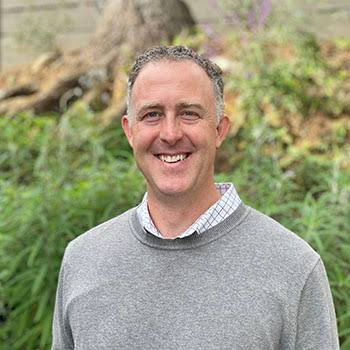
Brandon Moffitt knows both sides of that. He grew up with undiagnosed ADHD and dyslexia, in a school system that, as he puts it, didn't always have a way to name or address what he needed — even as some of his teachers saw him clearly anyway. Today he's a clinical mental health counselor at Black Mountain Academy, a specialized boarding school in North Carolina, and Intrepid Young Adults, a young-adult program twenty minutes away in Asheville. Both serve neurodivergent students and young adults. Both, he told me, exist because no one person or program can do this work alone.
Before any of that, Brandon spent years as a wilderness therapist. He remembers, specifically, three former students — he can still see their faces — who each hit the same moment near the end of their time in the program: do I have to leave?
“This is a temporary short-term chance to do some work and reorient onto your future. You can't stay here for seven months. This is not a long-term thing, this is not a school — and I think what I'm picking up on was this deep sense of connection, this sense of coming alive in this amazing way and finding joy in the simplest of ways.”

He's careful not to romanticize the field. Wilderness therapy has real, well-documented history of harm — programs run without clinical grounding, without accountability, sometimes without basic safety. Brandon doesn't dispute any of that. His answer, instead, is the same one he gives about his own years in a classroom during the shift toward standardized testing: the work has to keep evolving, the same way rock-climbing safety standards he learned twenty-five years ago look almost nothing like what he's teaching his own daughter today.
“We are accountable to that. We are talking to the people doing research in each of these fields — education, mental health, outdoor leadership — and we are practicing that accountability by evolving what we're doing to best serve the people we're working with.”

The center of Brandon's current work is what he calls a core team — a primary therapist, a lead teacher, a lead residential coach, and the student's family, meeting weekly around one young person's actual goals, not just their diagnosis. He pushes back, gently but firmly, on a pattern he sees in almost every family he works with.
“There's this false dichotomy for us often as parents: if our kid is succeeding, it's to our credit, and if they're failing, it's our fault. It feels good to get credit. It feels really lonely and isolating to be faulted for your child's needs.”
Here's the moment that stopped me: Brandon's advice to his younger self wasn't about technique or credentials. It was to build a group of mentors on purpose, rather than waiting for them to show up — and to hold onto joy and hope even while doing genuinely hard work. That's not a small thing to hear from someone twenty-five years into this field, still running an annual symposium to train other clinicians, still doing the work himself.

If you take one thing from this conversation, take Brandon's closing answer: go outside for ten minutes today. Notice the birds in your yard, or the nearest park, or the one tree on your block. He still counts that as one of the most grounding parts of his own week — not because it's a program, but because it's just his life.
Listen to this week's episode of Hopeful by Nature wherever you get your podcasts.
— Scott
Wildward Institute supports organizations, educators, and parents building meaningful relationships between young people and the outdoors. Learn more at wildwardinstitute.net.
Resources mentioned in this episode:
Black Mountain Academy · Intrepid Young Adults · Autism Symposium · Berea College · SUWS of the Carolinas
Subscribe to Hopeful by Nature to get the next story in your inbox.


Comments