
I Didn't Start the Fire: What a Burned Redwood Forest Taught Me About Leading Through Crisis.
6 months into my role as Interpretive Program Manager with California State Parks, Big Basin Redwoods State Park reopened to the public. After the CZU Lightning Complex Fire in 2020 burned 90% of the park, it remained closed for 2 years. I’d only visited the park three times. I was still learning the trails.

The man came in fast. His voice was loud before he was close. He was pointing, accusing me, the department, and the silence where park facilities and amenities used to be. Why hadn't we done more to protect it? Why weren't we welcoming people back properly? Why weren’t we doing enough?
I felt it before I thought it. My blood pressure spiked. My heart rate climbed. My shoulders pulled in toward my ears. My eyebrows drew together. Every instinct I had was to explain, defend, correct. I wanted to point out I hadn't even been here in 2020! I had no authority over the decisions he was angry about. California State Parks had spent years carefully stewarding the old-growth redwood stands that survived.
It wouldn’t have helped. Somewhere in my body, I already knew it.
So I paused. I let him finish. And then I said something close to: I appreciate that. That's right. I appreciate that. I asked him questions. I mirrored his words back to him. I didn't try to win. I tried to understand.
The interaction ended with mutual laughter and a handshake.
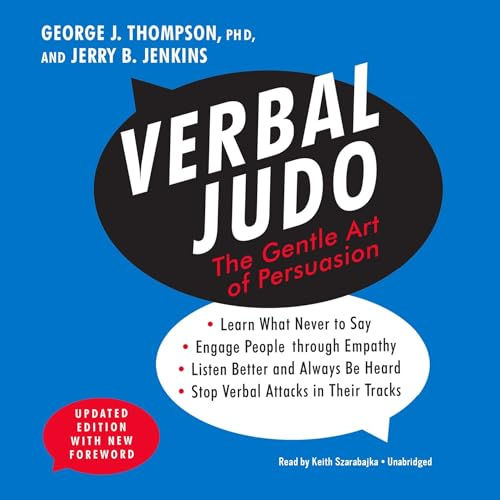
I didn't read Verbal Judo by George Thompson until years later — but when I did, I recognized what had happened that day. The book gave language to something I had already felt in my body: that powerful leaders redirect volatile moments, rather than react. There's a meaningful difference in responding to these moments rather than reacting, and that difference lives in the pause between stimulus and action.
Thompson calls it the Wooshin state: remaining disinterested rather than uninterested, open rather than defended, flexible rather than rigid. The goal is never to win the argument. The goal is to redirect the energy, absorb what's real in the other person's pain, and move toward something better together. Flexibility, he writes, is strength. Rigidity is weakness.
But here's what the book doesn't tell you.
You can be the most skilled communicator in the room and still be standing alone in front of a community's grief that is bigger than any one conversation.
That visitor at Big Basin wasn't just angry at me. He was angry at fire. He was angry at loss. He was angry that something irreplaceable had burned and that no one had stopped it. He needed somewhere to put that, and I happened to be wearing a uniform.
That moment taught me something I've carried into every organization I've worked with since: when a community is in crisis, individual skill is necessary but never sufficient. You need a structural response. You need to give people somewhere to go with what they're feeling — not just a person to talk to, but a container large enough to hold the whole story.
So we built one.
In June 2023, California State Parks hosted 18 artists at Big Basin Redwoods — painters, sculptors, musicians, printmakers, mapmakers — for the first camping trip in the park since the fire. Their charge was simple: go into the forest, experience what remains, and make something from it. The result was the Big Basin Art About, an exhibit that opened to the public one year later as a place where visitors could move, in the words of the project, from devastation to inspiration.

Not from devastation to resolution. Not from devastation to forgetting. From devastation to inspiration.
That distinction matters enormously, and it's one that nonprofit leaders working in environmental education, conservation, and community advocacy need to hold carefully. The communities you serve are not looking for someone to tell them everything is fine. They're looking for proof that something real is still possible.
What this means for your organization.
Whether your staff is managing volatile visitors, navigating a community in grief after an environmental disaster, or simply trying to hold a difficult conversation with a funder who doesn't believe your data tells the right story — the skills required are the same.
Thompson asks readers of Verbal Judo to Listen, Empathize, Ask, Paraphrase, Summarize. It sound simple, but its not. They require your staff to manage their physiological responses in real time — the rising heart rate, the clenched jaw, the urge to explain — while simultaneously creating enough safety for the person across from them to actually be heard.
Before the Art About opened, I prepared park staff not with scripts but with awareness: you will encounter people who come in carrying things that have nothing to do with you, and everything to do with what they've lost. Your job is not to fix it. Your job is to receive it, redirect it, and point it toward something that can hold it.
That is also your job as a nonprofit leader. And it is a skill — one that can be taught, practiced, and embedded into how your organization communicates at every level.
On hope.
We cannot afford to be despondent in the face of climate change. The science is difficult. The losses are real. The grief is legitimate. And none of that changes the fact that the redwoods are still there and that people are still coming to stand among them, still bringing their children, still making art in the shadow of what burned.
Hope is not the denial of what's hard. It is the decision to keep showing up anyway, and to build organizations skilled enough to meet people where they are.
That visitor and I ended with a handshake. I don't know if he left satisfied. I know he left understood. Sometimes that's the whole job.
If your organization is navigating difficult community dynamics, staff communication challenges, or the particular pressure of doing meaningful environmental work in a climate of urgency and grief. The Field Program Audit exists for these exact moments.


Comments