
Conservation Careers and Disability – It Doesn't Discriminate
Updated: Oct 6
Building Careers in Conservation for Young Adults with Disabilities | Susie Schroer, AmeriCorps YES Initiative
A little over a year ago I went from someone who surfed, climbed, and hiked without a second thought to someone who couldn't walk to the mailbox without stopping to rest.

An invasive surgery. Diverticulitis had done enough damage that a section of my intestine had to come out. I've written about the lead-up to that surgery before — the decade of stress-related illness, the trips to the emergency room, the way my body kept sending a message I didn't want to hear. What I haven't written about as much is what came after. Nine inches of intestine removed, and nearly twelve months to fully recover.
For most of that year, I was, in every practical sense, a member of the disability community.
I didn't apply to join. Nobody does.
I've been thinking about that sentence a lot since I sat down with Susie Schroer.

Susie works with AmeriCorps and Conservation Legacy, managing the Youth Empowerment Stewards initiative — known as YES — which places young adults with disabilities into AmeriCorps service positions with the National Park Service. Before that, she spent years building adaptive recreation programs in Utah: whitewater rafting trips engineered for wheelchair users, rock climbing systems built for climbers with no use of their legs, snowshoeing and canoeing programs designed around the actual person in front of her rather than a generic accommodation checklist.
In 2020, Susie was diagnosed with multiple sclerosis. She has been open about it ever since, in part because of something she said to me that I haven't stopped turning over:
"The disability community is maybe the most diverse minority community, in that it does not discriminate. Anybody can join at any time."

She's right. I joined mine on an operating table. Susie joined hers with an MRI. Some people are born into it. Some people acquire it on a Tuesday. There is no group of people on earth who are exempt from this particular possibility — which means there is no group of people on earth who shouldn't care, deeply and practically, about whether the spaces we build are designed for more than one kind of body.
I have a personal reason for caring about this beyond my own recovery.
My son has ADHD. He missed significant foundational math instruction during distance learning in the early years of the pandemic, and the gap that left behind has fed directly into his anxiety. Math, for him, often starts with anger before it can start with anything productive. I've been working with him on this since second grade. This summer is the first time I've made a sincere, sustained effort to actually redesign how I teach him — not just to push through with more repetition, but to ask what specific design choices would make the material accessible to the way his brain actually works.

I was diagnosed with ADHD myself at age nine. I have spent most of my adult life ignoring my own need for accommodation, treating it as something to push through rather than something to design around. Watching my son struggle has forced me to confront that. Universal design isn't an abstraction. It's the difference between a kid giving up on math and a kid finding his way into it.
I carried some version of this belief into my work at California State Parks, where I built a training platform for interpretive staff across the state to learn about different disability communities and the accessibility tools available to them. I partnered with organizations like IBCCES and David's Chair to bring adaptive equipment and certified training into state park programming. Both partnerships were eventually shut down by the bureaucratic realities of a large state agency — funding cycles, staffing turnover, the slow grinding machinery of institutional change. I don't have a clean before-and-after story to tell about that work. I have an unfinished one. That feels like the honest version.

Susie's work has stayed remarkably unfinished in the same way, and she talks about it without flinching.
Recruitment for YES positions is genuinely hard. Some of the most compelling roles — including adaptive paddling and water access work along the Niobrara National Scenic River in Nebraska — are struggling to find applicants, partly because of housing constraints in rural areas, partly because moving across the country to do something unfamiliar is, understandably, intimidating for anyone, disability or no.
But the model itself is working in a way that's hard to argue with. Susie described a young man, paralyzed after a back injury, who had been an athletic outdoorsman his whole life and didn't know what came next. He took a YES position. He's going back to school for wildlife management now. "I know I can do this," he told her.
That's the sentence the entire program exists to produce.
What struck me most in this conversation wasn't the policy infrastructure, though that matters. It was the way Susie talked about access at the smallest possible scale.
"The more information you have, the more approachable something becomes," she told me. "I was terrified of a bobcat call until I learned what it was. Then I wanted to see one."
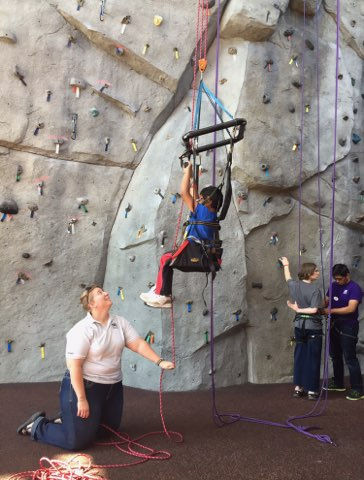
Access, in her telling, isn't only ramps and grab bars and modified equipment, though it's also exactly that. It's also information. It's knowing what to expect before you go somewhere unfamiliar. It's a park accessibility review that tells a wheelchair user what the terrain is actually like before they arrive, rather than after. It's a kid identifying an animal track for the first time and realizing the woods aren't something to fear.
Universal design, done well, removes fear for everyone — not just the person it was explicitly built for.
If you work in conservation, education, or outdoor recreation, here's what I'd ask you to take from this conversation: look at one program, one trail, one classroom you're responsible for, and ask what single design choice would make it more accessible to someone you haven't been thinking about. You don't need a grant. You don't need a task force. Susie started with a welcome letter. I started, this summer, with my own son's math homework.
You can find Susie's work and the current YES Initiative openings at stewardslegacy.org/yes. If you know a young adult between 18 and 30, or up to 35 with veteran status, who might want a career in conservation, there's a specific opening right now at the Niobrara National Scenic River in Nebraska that needs applicants. The link is below.
Listen to this week's episode of Hopeful by Nature wherever you get your podcasts.
— Scott
Wildward Institute supports organizations, educators, and parents building meaningful relationships between young people and the outdoors. Learn more at wildwardinstitute.net.
Resources mentioned in this episode:
YES Initiative — stewardslegacy.org/yes
AmeriCorps — americorps.gov
Salt Lake County Parks & Adaptive Recreation — saltlakecounty.gov/parks-recreation/adaptive Utah Office of Tourism / Accessible Utah — visitutah.com/plan-your-trip/accessible-utah National Ability Center (formerly SPLORE) — nationalabilitycenter.org
Niobrara YES Position Opening — secure8.entertimeonline.com/ta/conservationlegacy.careers?ShowJob=721974147
Subscribe to Hopeful by Nature to get the next story in your inbox.


Comments