
As Safe As Needed, Not As Safe As Possible – How Risky Play Benefits Everyone
Play therapist Jamie Lynn Langley on hummingbird parenting, nature prescriptions, and why a magnifying glass can change how a kid sees the world.

We have two microscopes in our house. One's the old-fashioned kind you twist up and down. The other plugs into a screen and lets my kids zoom in on anything in the yard — a leaf, an ant, a drop of water. It didn't just give them something new to play with. It changed how they look at the world. Not just big. Small, and smaller, and smaller still.
I brought that up with Jamie Lynn Langley, a licensed clinical social worker in Murfreesboro, Tennessee, who's spent thirty-seven years in play therapy — the first fifteen doing it entirely indoors, the rest built around what she now calls nature play therapy. She told me she sees the same shift happen with a two-dollar magnifying glass that I've seen with our microscope: a kid who was afraid of bugs a minute ago becomes a discoverer.

Jamie has a phrase for the kind of parenting that makes room for that discovery: hummingbird parenting. Not helicopter parenting, hovering over every step. Flitting in, flitting out. Watching from a distance. Letting the kid lead the walk.
"It doesn't mean you have to constantly direct every single thing that they do. Let them go explore. Hang back. Follow them."
She told me a story that still has me smiling: she'd just finished training a room of therapists at a state park on how to help kids assess risk before climbing a tree — which branch is solid, when to stop, how to guide instead of forbid. They walked outside for a nature walk minutes later and passed a dad, mid-lesson, helping his son up a tree. She hadn't set it up. She couldn't have timed it better if she'd tried.

Jamie's central argument is that we've confused as safe as possible with as safe as needed, and the gap between those two costs kids something real. She doesn't see many casts anymore either — and neither do I. Scraped knees, sure. But the campaign to eliminate risk seems to have mostly eliminated the kind of small, recoverable risk that used to teach a kid how to judge the next one.
She gave me what she calls her Big Three — the three things she tells skeptical parents to get their buy-in: nature measurably decreases anxiety and depression while increasing focus; even five minutes outside starts lowering cortisol, with real benefit at two hours a week, split however you need to; and kids who get that time simply grow up happier and healthier. "What parent," she said, "doesn't want that?"
Here's the moment that actually stopped me: she prescribes nature the way a doctor prescribes
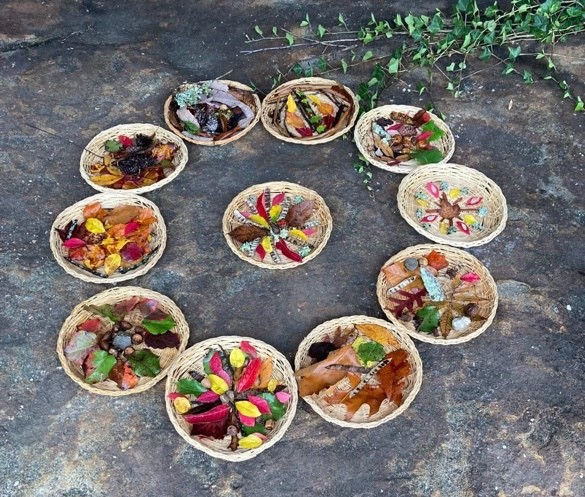
medicine — a literal nature adventure mission, sometimes with a nature play kit attached, magnifying glass and binoculars included. Kids show the prescription off to their friends. It works because it's not a chore. It's an assignment with a reward baked into the doing of it.
Trade twenty minutes of screen time for twenty minutes outside this week. No instructions. See what your kid notices that you would have missed.
Listen to this week's episode of Hopeful by Nature wherever you get your podcasts.
— Scott
Wildward Institute supports organizations, educators, and parents building meaningful relationships between young people and the outdoors. Learn more at wildwardinstitute.net.
RESOURCES MENTIONED IN THIS EPISODE
Jamie Lynn Langley, LCSW — playtherapy resources via Tennessee Association for Play Therapy
Children & Nature Network — hummingbird parenting concept, research library
"Three Generations" — short film referenced on generational outdoor play
iNaturalist — citizen-science photo identification platform
Subscribe to Hopeful by Nature to get the next story in your inbox.


Comments