
Outdoor Equity Beyond Access: What Rising Routes' Mary McKean Wants Outdoor Providers to Know
A kid needs a ride to an after-school program in the foothills. Someone has to drive twenty to fifty minutes, drop her off at three p.m., and pick her up again. Fix that, and you've solved access. Right?

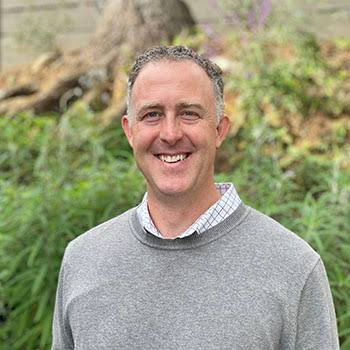
Mary McKean doesn't think so. On the latest episode of Hopeful by Nature, Mary, who is part of
the team at Rising Routes in Colorado, argues that transportation, snacks, and gear are only the visible barriers. Underneath them is something harder to see and slower to repair: whether people feel they belong outdoors at all.
Here are the ideas from our conversation that I keep thinking about, and what they mean if you run, fund, or teach in outdoor programs.
Who is Mary McKean, and what is Rising Routes?

Rising Routes is a Colorado 501(c)(3) working on outdoor equity by supporting the people who deliver it: the outdoor providers who take kids, families, and communities outside. Mary describes their role as connecting those organizations and improving the conditions they work in. In nonprofit language, that makes Rising Routes a backbone organization.
Mary began in outdoor education, working with participants from age two into their nineties. The pattern she saw again and again was who got to participate: families with transportation, money for fees, and time. Her conclusion was not that outdoor education doesn't work. It was that the system around it needs work so it can reach more people.
Why outdoor access is a systems problem, not a program problem

Most outdoor programs can only change what they control: their own schedule, their own sliding scale, their own van. But Mary points to a larger set of forces, including funding instability, thin staffing, and a landscape where providers rarely know who else is serving their community.
When I worked in Southern California, my program removed barriers by providing transportation, food, instruction, and equipment. It still wasn't enough. We had to build trust family by family, with slow, steady, consistent presence. Mary's work at Rising Routes points to the same lesson at a statewide scale: "you have to move at the pace of the community you're working with."
"Disenchanted," not "disconnected": redefining outdoor equity around choice
One of the most useful ideas in the episode is a vocabulary change. Mary says Rising Routes uses the word "disenchanted" instead of "disconnected." Every culture has deep, historical relationships with the outdoors. For many communities, systemic barriers over generations eroded the sense of belonging, but not the relationship itself.

That is why Rising Routes recently refined its definition of outdoor equity to include choice. The goal is not to take people hiking for the first time. It is to empower individuals and communities to build their own relationship with the outdoors, in whatever way they want.
I learned this the hard way. I once assumed a student had spent little time outside, only to learn he'd spent ten years in a refugee camp gathering food from the forest with his father every morning. My assumption was the barrier. When we centered his story, he helped other students feel comfortable in new environments.
For program directors, this is a design question: whose ways of being outdoors does your program make room for?
What 80+ Colorado outdoor providers said: four barriers
Rising Routes surveyed more than 80 providers for A Roadmap for Colorado's Outdoor Access

Ecosystem, and the four barriers that emerged were:
Funding and stability, with providers dependent on gifts, grants, and donations that make every year feel uncertain
Access, including transportation and gear
Workforce development
Fragmented collaboration
Mary said the first two confirmed what the field already knew. The surprise was how high fragmented collaboration ranked. Leaders who run partnerships and strategy are often also in the field, "cleaning the bathrooms," in her words. You might assume they have no capacity to think about systems. Instead, they consistently said they want stronger, more coordinated partnerships.
From research to action: the PEAK program

Rising Routes' research became the foundation for PEAK, a statewide effort to elevate provider priorities and advocate for solutions, including statewide funding for partnerships. Mary described a planning retreat with partners including Colorado Parks and Wildlife, the Regional Partnership Initiative, Great Outdoors Colorado, and the Wilderness Society, and said community listening sessions with providers were planned for the fall so providers can shape the program before it grows.
That sequence matters. Gather data directly from the people you want to serve, bring decision-makers into the room, then go back to providers to test what is realistic. It is a process many programs skip.
What a backbone organization actually does
Mary says the hardest part of explaining Rising Routes is that it is easier to say "we take 200 kids backpacking every summer" than "we support the providers who do." In practice, the support includes:
Technical assistance, such as helping a community-based provider turn its story into a competitive grant application
Shared services in development, such as one person who understands the Colorado outdoor equity landscape serving as bookkeeper for several organizations
Training in grant writing, HR, budgeting, and bookkeeping, the core responsibilities that get squeezed out of busy days
Data and visibility, including a planned tool so providers can see who else is serving their community, and funders and policymakers can see the whole landscape
On collaboration, Mary was honest: "It's not the easiest thing in the world. I think otherwise more people would do it." Her advice is to bring in a third party, set up a memorandum of understanding, and make sure the core pieces are in place before you begin.
Compounding access: the idea from Mary's MBA

My favorite moment came when I asked Mary for a time she knew time in nature changes
people. After a story about a 30-day backpacking trip in college, she described what she learned in business school: compounding interest and compounding debt. A small amount invested early grows on itself. So does a small amount owed.
Access works the same way. Playing outside, a mentor who teaches a skill, the confidence to go somewhere harder: each makes the next experience possible. And when someone doesn't feel welcome, that gap compounds too. Mary's goal is to put more pieces in place so people's relationship with nature, with themselves, and with their sense of purpose can compound through many experiences.
Where Rising Routes is headed
Mary sees Colorado as a proof of concept. Rising Routes is now doing a similar research study in New Mexico with that state's Outdoor Equity Fund and the Wilderness Society, and hopes to expand the research and PEAK advocacy model to more states in the next five years, alongside a public data platform for providers, funders, and policymakers.
What you can do this week
If you run an outdoor program: find one neighbor doing similar work and have a conversation. Mary's advice is to learn about the landscape around you, because so many of the pieces already exist.
If you're building or funding a program: start with groundwork. My free Fund and Launch
Your Outdoor Program guide walks through your idea, a readiness scorecard, a grant worksheet, your funding mix, and your first ask.
If you lead a parks department, resource conservation district, or nonprofit: the Field Program Audit is how I work with program directors, and I support parks departments, districts, and nonprofits.
If you're an educator: browse the free resources for educators, including the Outdoor Learning Starter Pack.
If you're an environmental education professional: see what I offer for EE professionals.
If you're in Colorado: join the Rising Routes provider network using the green box at risingroutes.org.
For everyone: Mary's one ask was to get outside, listen to the birds, and keep that connection alive so you have more to give.
Frequently asked questions
What is outdoor equity? Outdoor equity means everyone has a real choice to build their own relationship with the outdoors. Rising Routes' definition includes choice, not just access to transportation and gear.
What is a backbone organization? A backbone organization supports other organizations working on a shared goal, through data, coordination, advocacy, training, and shared services, instead of delivering programs directly.
What is Rising Routes? Rising Routes is a Colorado nonprofit working on outdoor equity by supporting outdoor providers through research, coalition building, technical assistance, and advocacy.
What barriers do outdoor providers in Colorado face? According to Rising Routes' survey of more than 80 providers, the four barriers are funding and stability, access, workforce development, and fragmented collaboration.
Listen, watch, and connect

Listen to the full conversation at wildwardinstitute.net/hopefulbynature or listen wherever you get your podcasts. If you missed my earlier conversation with Gena Bentall of Sea Otter Savvy, which inspired the "keystone organization" idea in this episode, start there. And if you're working on a program right now, book a free 15-minute call and bring the stuck part. More from the Journal.


Comments